
Septic property transfer inspection
A septic property transfer inspection is the examination a home sale triggers. A specialist certified by the county health department opens the system, checks that it works, and writes a report the county will accept and keep on file. Whatcom and Skagit counties require one now. Snohomish County requires a Report of Property Transfer from November 1, 2026.
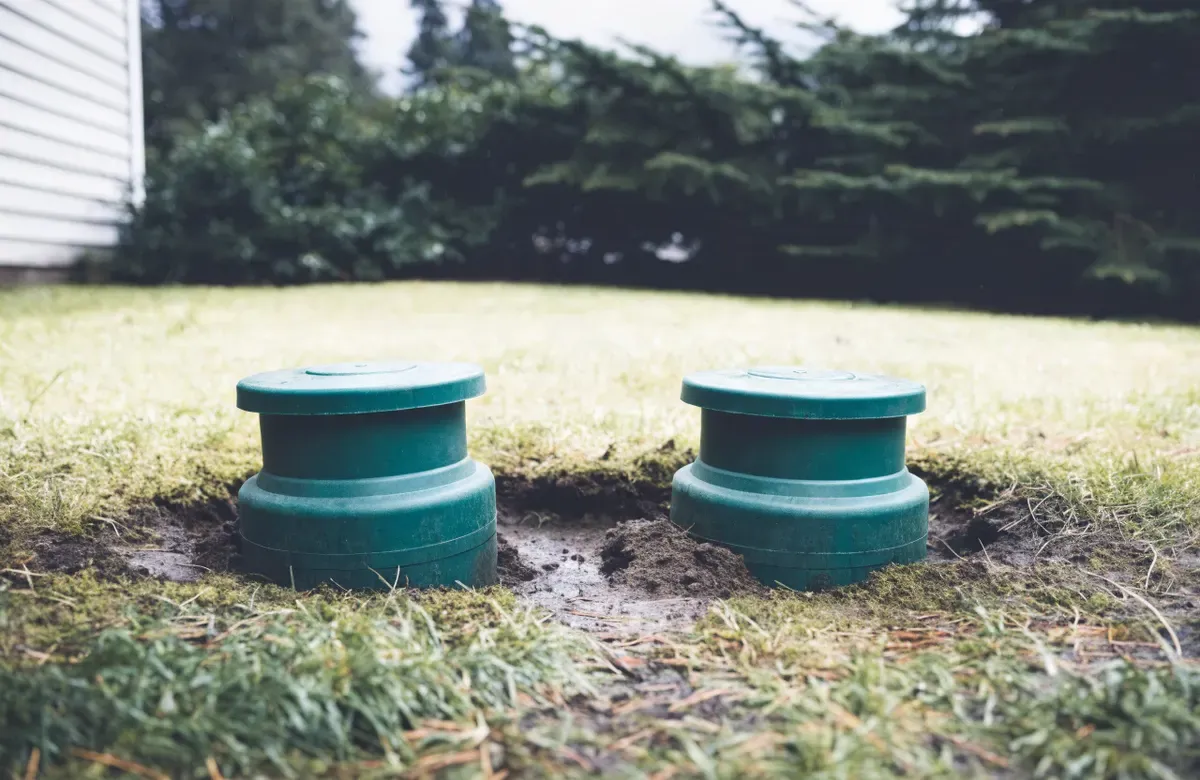
The quote is free, and this page explains what you are buying before you buy it.
What is a septic property transfer inspection?
It is a condition report on the whole on-site sewage system, written on the form your county accepts, filed with the county, and used to satisfy the requirement that attaches to the sale. It is not a general opinion about the property. It is a specific document with a specific reader, and the reader is the health department.
That distinction matters when you are choosing who to call. A contractor can be excellent at pumping tanks and still not hold the certification that lets them sign the document your county files. Ask which form they produce and for which county before you book. If you want the full county by county picture first, the North Sound septic transfer rules guide covers all three counties and the statewide rule in one place.
Who is allowed to perform it in each county?
Not the homeowner. There is no statewide septic credential in Washington, so the answer is county certification for the specific work, plus registration of the contracting business with Washington Labor and Industries. The wording differs by county.
- Whatcom County. The county names an Operations and Maintenance Specialist licensed by the county. A homeowner may not evaluate their own system when the evaluation is for a sale or property transfer. Source: Whatcom County Health and Community Services (checked 2026-09-15).
- Snohomish County. The county names a certified septic contractor for the full inspection, which has to fall within the 12 months before closing, and for the site plan step when no as-built exists. Pumping is conditional rather than automatic: the tank has to be pumped as well, by a certified septic contractor, but only where the inspection report recommends it. Source: Snohomish County Health Department (checked 2026-09-15).
- Skagit County. The county names a certified operations and maintenance specialist, and certifies that credential itself at two levels. Level 1 covers conventional gravity, pressure distribution, and gravity with pump systems. Level 2 covers mound and sand filter systems and proprietary systems, so a mound needs a Level 2 provider. The requirement sits in Skagit County Code 12.05.160(2). Source: Skagit County Code 12.05.030 and 12.05.230 (checked 2026-09-15).
- Statewide from February 1, 2027. WAC 246-272A-0270 calls for a third-party inspector authorized by the local health officer at every property transfer. Read the rule (checked 2026-09-15).
Certification is issued per county and per type of work, so it does not travel. Someone certified for operation and maintenance inspections is not automatically certified to install a replacement system, and a certification held in one North Sound county is not a certification in the next one over. County detail sits on the Snohomish County page and the Whatcom County page.
What does the inspector actually look at?
The exact checklist is set by the form your county accepts, so ask for a copy of that form before the visit and read it. Broadly, the specialist is working through the system from the house outward and recording condition at each stage.
- The tank: liquid level, sludge and scum depth, structural condition, and whether the inlet and outlet baffles are intact.
- The access lids and risers, including whether they can be found and opened at all. A buried lid is a common reason a visit turns into two visits.
- The line from the house, and any distribution box or drop box that splits flow between drainfield lines.
- On a pumped system, the pump chamber, the pump itself, the float switches, and the control panel and alarm.
- The drainfield surface: ponding, soggy ground in dry weather, unusually vigorous growth over the lines, and any sign of surfacing effluent.
- Whether the system on the ground matches the as-built the county holds. If the county holds no as-built, that gap is itself a finding.
In Snohomish County that last point has a rule attached. If the county has no as-built record of the system, a certified septic contractor must draw an On-Site Sewage System Site Plan and it is submitted with the application. It is worth calling the health department before you book anything to ask whether they hold a record for your parcel, because the answer decides whether you need one appointment or two.
The county fee and the contractor's charge are two separate bills
The contractor bills you for the site visit and the written report. That is one charge, from the contracting business, and it varies with the system type and how accessible the components are. The county charges its own fee for reviewing, accepting, and filing the paperwork. That is a separate charge, from the health department, and it is not collected by the contractor.
This page publishes no figure for either one, and the counties themselves are the reason. Skagit sets its fees by resolution rather than in the code, in a document called the Schedule of Charges, so the current amount comes from the health department rather than from the code text. Snohomish has not named an amount, and cannot take an application or a fee until November 1, 2026. Printing a number either county has not published would be repeating a figure rather than reporting one. Ask the contractor for a written price before the visit, and the county for its current filing fee when you apply. Both answers are free.
What is the report used for?
It goes to the county, and the county's acceptance is the thing that actually clears the requirement. In Snohomish County the accepted Report of Property Transfer is valid 12 months from the date the health department accepts it, so it can be completed before the house is listed and still be current at closing. In Whatcom County the ROSS has to be on file when the property is offered for sale, which puts it at the start of the timeline rather than the end.
Along the way it does other work for you. Buyers, agents, lenders, and title companies all tend to ask for it, and having an accepted report in hand removes a negotiating lever before anyone reaches for it. It also becomes the record that the system was functioning at transfer, which is the point of the rule.
Between sales, the same kind of inspection carries a different name and a schedule. WAC 246-272A-0270 sets routine inspection at least once every three years for a basic septic tank and drainfield system, and once a year for every other type of system, unless the local health officer requires it more often. The operation and maintenance page covers that cycle, which matters here because a system already on the cycle usually has less to fix when a sale arrives.
What happens if the inspection does not pass?
Nothing stops. A failed report moves the problem into the contract, where it becomes a question of who does the work and who pays for it. Sellers in that position generally have three routes: repair the specific fault, replace the system, or agree a price adjustment with a buyer who now knows exactly what the work involves. Which of those your contract allows is a question for your agent and escrow, not for this site.
What decides between repair and replacement is what failed. A cracked baffle, a failed pump, a blocked or collapsed line, or a control panel fault are components, and septic repair can be the right answer. A drainfield that no longer accepts water is a different situation, because the soil itself has reached the end of its working life, and that is a septic system replacement.
Replacement in the North Sound is often a mound or pressure distribution system rather than a gravity drainfield, because much of the lowland here drains slowly and sits over a high winter water table. That is a soil evaluation, a designer, a county permit, and a certified installer, in that order. If you are already holding a failed report, the failed septic inspection guide puts the options in the order you have to decide them.
How long before closing should you book a septic property transfer inspection?
Before you list, not after an offer. The inspection itself is a single appointment. The county review that follows it is a queue you do not control, and anything the inspection finds adds its own scheduling on top. Booking early costs nothing in Snohomish County, where an accepted report stays valid 12 months.
We publish no turnaround in days here. No county publishes a review time we have been able to verify, and a made-up number would send a seller into a closing date with the wrong expectation. Ask the health department for its current review time when you apply, and treat that answer as the one that governs your calendar.
How the quote works
Tell us the county and what the property needs. Your details go to one independent local septic contractor certified by that county health department, usually within about an hour during the day, not to a national lead list. You are never charged for the referral; the professional pays a referral fee, and that fee does not increase what you pay for the work. North Sound Septic Pros does not inspect, pump, repair, or install septic systems.
Common questions
Who is allowed to do a septic property transfer inspection in Washington?
A specialist certified by the county health department for the county the property sits in. Snohomish County names a certified septic contractor, with the inspection inside the 12 months before closing. Skagit County names a certified operations and maintenance specialist, certified at Level 1 or Level 2 depending on the system type. Whatcom County names an Operations and Maintenance Specialist licensed by the county and states that a homeowner may not evaluate their own system for a sale. From February 1, 2027, WAC 246-272A-0270 calls for a third-party inspector authorized by the local health officer statewide.
Is the county fee included in what the contractor charges?
No. The contractor bills for the visit and the written report. The county charges its own separate fee for processing the paperwork. Neither party collects for the other, and this page does not publish either figure because no county fee has been read at its source yet.
Does pumping the tank count as a transfer inspection?
No. A pump out empties the tank. A transfer inspection covers the condition of the whole system and produces a report the county accepts and files. The two are often booked on the same visit, but one does not replace the other.
What happens if the septic inspection does not pass?
The sale does not stop by itself. The finding moves into the contract, where the seller repairs the fault, replaces the system, or agrees a price adjustment with the buyer. A component fault is often a repair. A drainfield that has stopped accepting water is usually a replacement.
Get a free quote for a transfer inspection
Check your septic transfer requirements in the North Sound
Every figure below links to the county or state page it came from, so you can confirm it yourself rather than take our word for it.
The statewide rule that arrives February 1, 2027
Washington rule WAC 246-272A-0270 adds a property transfer inspection statewide beginning February 1, 2027. It has to be done by a third party inspector the local health officer authorizes. Between sales, the same rule sets the routine schedule: at least once every three years for a basic septic tank and drainfield system, and once a year for every other type of system, unless the local health officer requires it more often. Read WAC 246-272A-0270 (checked 2026-09-15).
What your county requires now
-
Snohomish County
Selling a Snohomish County home on a septic system requires a Report of Property Transfer reviewed by the health department before closing.
In force from November 1, 2026.
Who can do it: a certified septic contractor
Who is responsible: the seller.
Timing: 12 months from the date the health department accepts it.
If the county has no as-built record of the system, a certified septic contractor must draw an On-Site Sewage System Site Plan and it is submitted with the application.
-
Skagit County
Skagit County requires an operation and maintenance inspection by a certified O and M specialist before any property transfer, unless one was already done in the six months before it.
Who can do it: a certified operations and maintenance specialist
Timing: an inspection done in the six months before the transfer already satisfies it, so a recent one can carry the sale.
A system with a proprietary treatment product has to be inspected every year by a certified operations and maintenance specialist, separately from anything a sale triggers.
-
Whatcom County
A Whatcom County home offered for sale must have a current Report of System Status, a ROSS, on file with the county.
Who can do it: an Operations and Maintenance Specialist licensed by the county. A homeowner may not evaluate their own system when the evaluation is for a sale or property transfer.
Timing: evaluations are required every three years for a conventional gravity system and once a year for every other type.
How to check the contractor yourself
-
Check the county certification for the work you need
A transfer inspection has to be done by a specialist the county health department certifies for operation and maintenance work. Installing a replacement system is a separate certification. Ask which one the contractor holds, and for which county.
-
Check the contractor registration with Washington Labor and Industries
Every contracting business working in Washington must be registered with L and I, which is a bond and insurance filing rather than a skills exam. You can look up the registration and see whether the bond is active. Verify a contractor with Washington L and I
Three questions worth asking before you hire
- Which county certification do you hold, and does it cover the work my sale actually needs?
- Is the report you produce the one my county health department accepts, and do you file it or do I?
- If the system fails, what are my options, and are you certified to do that repair or replacement too?
What it costs, and what happens after you send it
- What does septic work cost in the North Sound?
- No septic replacement price appears on this site, and that is deliberate rather than an omission. Nothing here is published until it has been read at a primary source, and no verified North Sound replacement figure has been. A range taken from a competitor page or a national average would be a guess wearing a number. Ranges for this work are wide enough to be useless anyway. The gap between the cheapest and the most expensive job on the same road can be several multiples, driven by ground conditions you cannot see from the street. System type is the largest lever, and your land sets it: a gravity drainfield, a pressure distribution system with a pump and control panel, and a raised mound are three different projects, and soil and water table decide which one your lot can take rather than preference. The certified installer who walks the lot is the only honest source of that number, and in Washington the system designer is a separately licensed role, so ask whether a quote includes the design, the permit, removing the old tank, and restoring the yard. The cost drivers guide walks through all seven, so a real quote makes sense when you have one in front of you.
- How fast will someone get back to me?
- Your request goes to an independent licensed local septic contractor, usually within about an hour during the day. That contractor then contacts you to look at the lot and quote the work on their own schedule.
- What work is covered?
- Property transfer inspections, septic system replacement, new system installation, mound and pressure distribution systems, repair, operation and maintenance, and pumping. See every service.
Only a licensed contractor standing on your property can price your actual system.
What your county actually requires
Tell us the county and what the property needs. The quote is free, and there is no obligation to book the work.
Your request goes straight to one independent local septic contractor certified by your county health department, serving Snohomish, Skagit, or Whatcom county. It does not go to a national lead list.